
Tampa Bay's Premier Drone Club
1. Pass The TRUST Test
You must take & pass the TRUST (FAA-Recretional Safety Test) Required By the FAA
The course is free & takes approx 15-30 mins to complete. You can't fail and should print/keep the certificate on hand when flying
You can take online at: https://trust.modelaircraft.org/
2. Register Your Drone *
* If Your Drone is over 250g or 2 sticks of butter, your aircraft will need to be registered with the FAA.
Registration costs about $5 and lasts 3 years. You’ll need to label your drone with the registration number.
For new pilots, we offer free stickers to attach to your aircraft here.
Click Here To View FAA Registration Portal: https://faadronezone-access.faa.gov/
3. Label Your Aircraft

If you have registered your aircraft with the FAA, write/label the aircraft with the registration number on the external frame of the aircraft.
For new pilots, we offer free stickers to attach to your aircraft here.
4. Follow Basic Rules
-
Keep Your Drone Within Visual Line Of Sight
-
Fly Below 400 Feet AGL.
-
Do Not Fly In Controlled Airspace Without FAA Approval
-
Don't Fly Over People/Or Moving Vehicles
-
Yeild To Manned Aircraft, Including Planes, Helicopters.
-
Don't Fly Over/Near Active Emergencies.
5. Know Where You Can't Fly


It is everyone's responsibility to ensure the national airspace is safe and legal.
6. Remote Identification Requirement
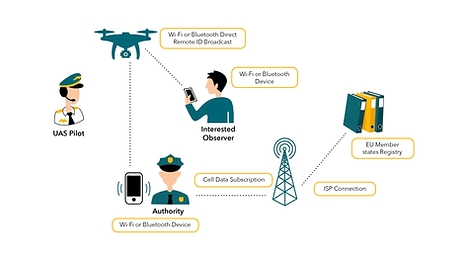
Most drones must broadcast identification info (called Remote ID). IF your drone is registered with the FAA.
-
Many newer drones already have this built in
-
Older drones may need an add-on module
We have all available RID Broadcast Modules here to view, and compare.

7. Requesting Airspace Authorization
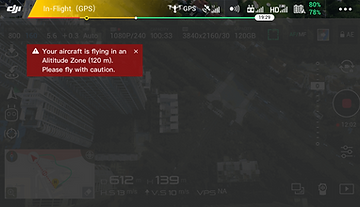
To fly in controlled airspace, you must request authorization through LAANC. Many LAANC Providers have a web app and or a mobile device you can request on site.



View FAA Approved Apps Here: https://www.faa.gov/uas/getting_started/laanc#approved
8. TFR & Special Airspace
Do Not Fly in TFR's Or Special Restricted Airspace
Check FAA Website Before Every Flight:

9. Ground Use & Legal Operations
The FAA Does Not Regulate The Ground Use. Only the Airspace is federally regulated. A Political Subdivision May Regulate ground use/takeoff/landing points.
FSS 330.41 Prohibits Political Subdivisions From Regulating Airspace In Addition To FAA Regs. It Does Not Limit Authority Over Ground Use. State Law Regulates Flights From State Park Lands Or Conservation Areas.
Page Last Updated: 8/9/2026